Patients & families / Meningiomas
Meningiomas
It is the most common tumor inside the skull. In the vast majority of cases it is benign, grows slowly and pushes the brain aside without invading it.
This is a summary. The complete guide (in Portuguese), with an interactive map, questions and research news, is at meningiomas.com.br.
What it is
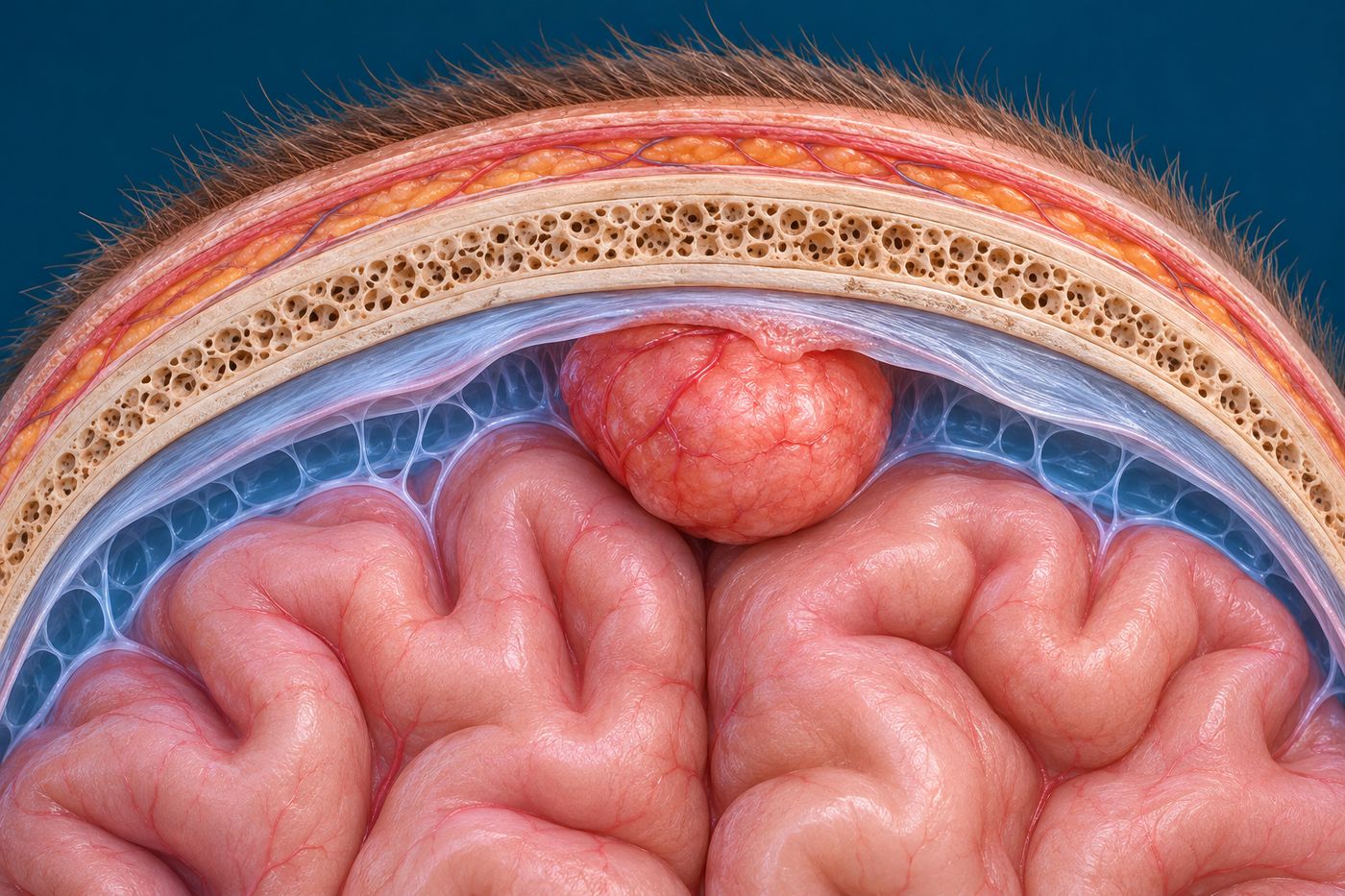
The brain is wrapped in three membranes, the meninges. The meningioma arises from arachnoid cells and is usually attached to the dura mater, the outermost layer.
It grows by pushing the brain. That is why many cause no symptoms for years and are found by chance on scans done for another reason.
Its location determines the symptoms: on the surface of the brain, at the skull base, near the optic nerves or in the spine.
Approximate figures (CBTRUS and WHO classification).
Symptoms
Because growth is slow, symptoms appear gradually and may be mistaken for tiredness, stress or aging.
Go to an emergency department immediately in case of a seizure, sudden weakness, sudden loss of vision or speech, or the worst headache of your life.
Diagnosis
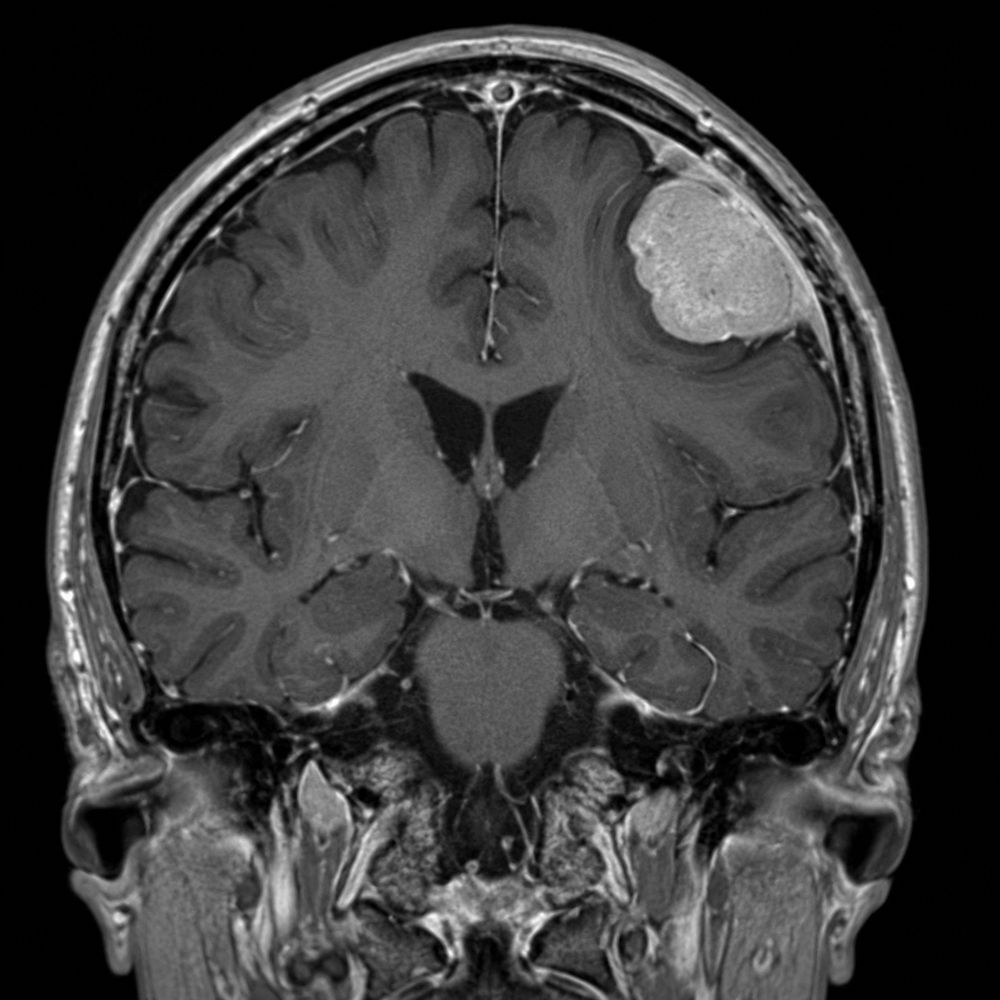
The main test is brain MRI with contrast. The meningioma appears as a well-defined mass resting on the dura mater.
CT helps show the bone. The definitive diagnosis, including the grade, comes from tissue analysis after surgery.
Treatment
There is no one-size-fits-all treatment. The choice takes into account size, location, growth, symptoms and age.

For small meningiomas without symptoms, with regular MRIs.
When: small, no symptoms, no growth
The main treatment when the tumor causes symptoms or grows. The tumor is removed together with the dura mater it is attached to.
When: symptoms, growth, large tumor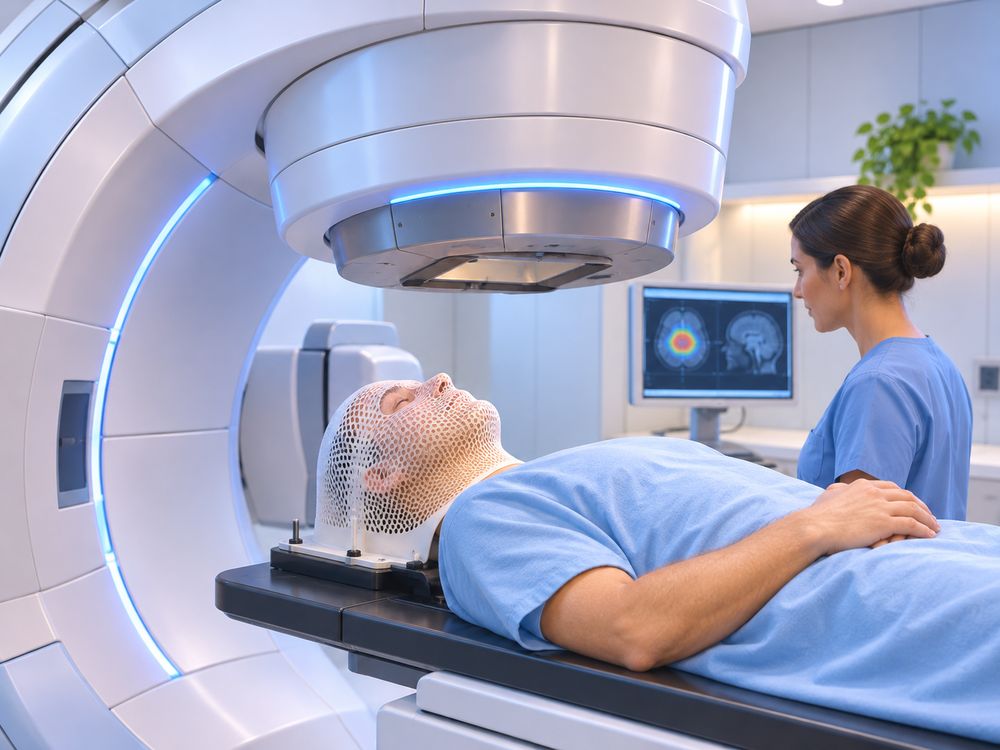
Precise radiation to control growth in high-risk locations, tumor remnants or grades 2 and 3.
When: high-risk location, residual tumor, grade 2 or 3After treatment
Even after successful surgery, a meningioma can come back years later. Follow-up MRIs are part of the treatment.
Exact timelines are set by your doctor according to your case.
For your appointment
Write down the answers, or bring someone you trust.
Frequently asked questions
About 80% are benign (grade 1). Even grades 2 and 3 rarely spread outside the nervous system.
Not always. Small tumors without symptoms can be monitored with MRI.
Long-term use of some high-dose progesterone-based medicines is associated with meningiomas. Talk to your doctor before stopping any medicine.
Research news
The first randomized trial on the topic shows that, for completely removed grade 2 tumors, radiotherapy lowers the risk of the tumor coming back.
ReadNationwide data from France link long-term progestogen use to spheno-orbital meningioma. The risk is low with common pills and much higher with high doses.
ReadA German study followed patients before and after surgery: some activities get harder at first, but improve by the third month.
Read Neurosurgery